 DroppedBit
Analyzing the Preview Challenge
Featured in the "⚡ A Glimpse of What Awaits" preview, this interactive terminal snippet streams an encoded inbound signal log. Beyond serving as an introduction to DroppedBit's puzzle mechanics, the log conceals a standalone decoding task and several historical computing Easter eggs.
1. The Intercept Log Payload
Here is the exact terminal log captured from the preview window (signal_intercept.log):
# INBOUND SIGNAL DETECTED — 1970.01.01 00:00:01 UTC
# SYSTEM CLOCK: T+0000000001 // TIMER: 60Hz
# ORIGIN: UNKNOWN NODE // PROTOCOL: ENCRYPTED // HARDWARE: PDP-11

NDDCsDQxJzAyLjMiTiwgNzTCsDI0JzA0LjYiVw==

# LATENCY: 0.042ms // BIT_ORDER: BIG-ENDIAN
# PACKET INTEGRITY: 100% // 0 FAULTS
# STATUS: READY FOR DISPATCH
At first glance, the log presents a mysterious encoded payload bounded by system status metrics and telemetry header fields.
2. Decoding the Signal Payload
The core challenge revolves around the highlighted string:
Identifying & Decoding Base64
The string immediately stands out due to its trailing = characters. In Base64 encoding, = (or ==) is used as padding to ensure the binary data aligns to 4-byte boundaries. Seeing these trailing == is a quick telltale sign of Base64-encoded text.
Base64 is a binary-to-text encoding scheme that translates binary data into a radix-64 ASCII string representation.
Using Python, we can decode the payload bytes into a UTF-8 string:
import base64

payload = "NDDCsDQxJzAyLjMiTiwgNzTCsDI0JzA0LjYiVw=="
decoded_bytes = base64.b64decode(payload)
decoded_text = decoded_bytes.decode("utf-8")

print(f"Decoded Signal: {decoded_text}")
# Output: 40°41'02.3"N, 74°24'04.6"W
Or directly via Unix command line:
echo "NDDCsDQxJzAyLjMiTiwgNzTCsDI0JzA0LjYiVw==" | base64 --decode
# Output: 40°41'02.3"N, 74°24'04.6"W
The decoded text reveals geographic coordinates: 40°41'02.3"N, 74°24'04.6"W.
These coordinates pinpoint a specific geographic location on Earth: Nokia Bell Labs in Murray Hill, New Jersey.
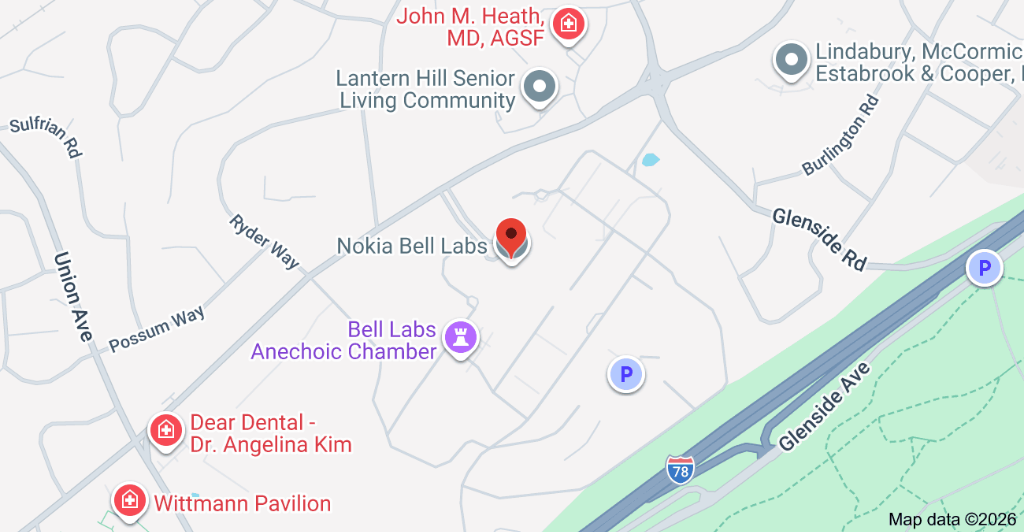
3. Uncovering the Easter Eggs
Both the decoded Base64 payload and the surrounding metadata header lines in signal_intercept.log are packed with computing history and tech lore:
1. Geographic Origin — Bell Labs (Murray Hill, NJ)
The historic headquarters of Bell Labs is the legendary birthplace of Unix, the C programming language, Information Theory (Claude Shannon), and modern telecommunications.
2. Unix Epoch Genesis
The header line # INBOUND SIGNAL DETECTED — 1970.01.01 00:00:01 UTC paired with # SYSTEM CLOCK: T+0000000001 marks 1 second after Unix Epoch zero (January 1, 1970 00:00:00 UTC), representing the very birth of Unix time representation across modern operating systems.
3. PDP-11 & The 60Hz Line Clock
HARDWARE: PDP-11 and TIMER: 60Hz refer to the Digital Equipment Corporation (DEC) PDP-11 minicomputer. Unix was famously rewritten in C by Ken Thompson and Dennis Ritchie on a PDP-11/20 and PDP-11/45. The 60Hz timer references the line frequency clock hardware interrupt (KW11-L) used for process scheduling in original Bell Labs Unix kernels.
4. Hitchhiker's Latency
LATENCY: 0.042ms is a nod to 42, the "Answer to the Ultimate Question of Life, the Universe, and Everything" from Douglas Adams' The Hitchhiker's Guide to the Galaxy.
Ready to try the full sequence? Start the chain on our store page →